Sentence Analysis: A Practical Guide to Understanding Sentence Structure
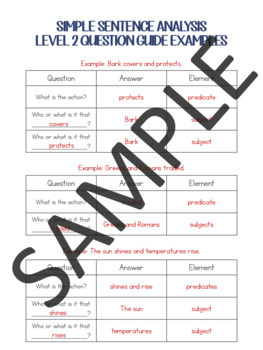
Sentence Analysis: A Practical Guide to Understanding How Sentences Work
Sentence analysis is the process of examining how words and phrases fit together to express a complete thought. By identifying a sentence’s subject, verb, objects, modifiers, and clauses, readers can better understand its meaning. Writers can use the same skills to improve clarity, variety, and correctness.
What Is Sentence Analysis?
Analyzing a sentence means looking beyond its individual words to understand their grammatical roles and relationships. For example, in the sentence “The curious child opened the old wooden box,” the words do more than name things: they work together to show who acted, what the action was, and what received it.
- Subject: The person, place, thing, or idea the sentence is about.
- Predicate: The part of the sentence that tells what the subject does or is. It includes the verb and may include other information.
- Object: A word or phrase that receives the action of a verb or completes its meaning.
- Modifier: A word or phrase that adds information about another part of the sentence.
- Clause: A group of words containing a subject and a verb.
Start With the Main Verb
A useful first step is to find the main verb. The verb often reveals what is happening and helps you locate the other parts of the sentence.
Consider: “Maya carefully packed her suitcase.” The main verb is packed. Asking “Who packed?” identifies Maya as the subject. Asking “What did Maya pack?” identifies her suitcase as the direct object. The word carefully describes how she packed.
Identify the Sentence Structure
After finding the main clause, look at how many independent and dependent clauses the sentence contains. An independent clause expresses a complete thought. A dependent clause has a subject and a verb but does not express a complete thought on its own.
- Simple sentence: One independent clause. “The train arrived.”
- Compound sentence: Two or more independent clauses. “The train arrived, and the passengers boarded.”
- Complex sentence: One independent clause and at least one dependent clause. “When the train arrived, the passengers boarded.”
- Compound-complex sentence: At least two independent clauses and at least one dependent clause. “When the train arrived, the passengers boarded, and the conductor checked the tickets.”
Look at Phrases and Modifiers
Phrases add detail but do not contain both a subject and a verb. Prepositional phrases, such as under the table or after lunch, can describe where or when something happens. Participial phrases can describe a noun, as in “Smiling at the audience, the speaker began her talk.”
Modifiers should appear close to the words they describe. In “She served sandwiches to the guests on paper plates,” the wording may suggest that the guests are on paper plates. Revising the sentence to “She served the guests sandwiches on paper plates” makes the intended meaning clearer.
Analyze Meaning and Punctuation Together
Grammar and punctuation help readers understand how ideas relate. Compare these sentences:
- “The coach said the team was ready.”
- “The coach, said the team, was ready.”
The commas change the structure and meaning. In the first sentence, the coach makes a statement. In the second, said the team is an interrupting phrase, and the team is describing the coach as ready.
Punctuation can also show how clauses connect. A comma and coordinating conjunction can join two independent clauses: “The forecast called for rain, but the game continued.” A semicolon can connect closely related independent clauses: “The forecast called for rain; the game continued.”
A Step-by-Step Method
- Read the sentence once for its overall meaning.
- Find the main verb or verb phrase.
- Identify the subject that performs or experiences the action.
- Look for objects and subject complements that complete the verb’s meaning.
- Separate the sentence into clauses and identify which are independent or dependent.
- Notice phrases and modifiers, checking what each one describes.
- Review punctuation and consider whether it supports the intended meaning.
Why Sentence Analysis Matters
Sentence analysis can help readers untangle long or unfamiliar passages, recognize relationships between ideas, and spot ambiguity. For writers, it offers a practical way to revise: a sentence can be shortened, reorganized, or combined with another to improve flow. It can also help identify common issues such as sentence fragments, run-ons, misplaced modifiers, and unclear pronoun references.
The goal is not to label every word for its own sake. The goal is to understand how a sentence works and whether it communicates the intended idea. With practice, analyzing sentence structure becomes a useful tool for reading carefully and writing with greater precision.
6 Tips for Analyzing Sentence Structure
- Identify the subject and predicate.
- Find the main verb first.
- Separate independent and dependent clauses.
- Mark phrases that modify other words.
- Check how each clause is connected.
- Use punctuation to spot sentence boundaries.
Identify the subject and predicate.
To analyze a sentence, start by identifying its subject and predicate. The subject tells who or what the sentence is about, while the predicate explains what the subject does or is. In “The students completed their assignment,” for example, “The students” is the subject, and “completed their assignment” is the predicate. Finding these two parts helps reveal the sentence’s basic meaning and makes it easier to understand more complex structures.
Find the main verb first.
When analyzing a sentence, find the main verb first. The verb shows what is happening or what state the sentence describes, giving you a useful starting point for identifying the other parts. Once you locate it, ask who or what performs or experiences the action to find the subject, then look for objects, complements, and modifiers that complete or add detail to the meaning. For example, in “The dog eagerly chased the ball,” the main verb is “chased”; “the dog” is the subject, “the ball” is the object, and “eagerly” explains how the action happened.
Separate independent and dependent clauses.
Separate independent and dependent clauses to see how a sentence’s ideas are connected. An independent clause expresses a complete thought and can stand alone, while a dependent clause has a subject and verb but relies on another clause to complete its meaning. For example, in “Although the rain stopped, the streets remained wet,” “the streets remained wet” is independent, and “Although the rain stopped” is dependent. Identifying each clause makes sentence structure easier to understand and helps you use punctuation correctly.
Mark phrases that modify other words.
Mark phrases that modify other words to see exactly how they add detail to a sentence. A prepositional phrase may tell where, when, or how something happens, while a participial phrase may describe a person or thing. For example, in “The dog sleeping by the fireplace wagged its tail,” the phrase “sleeping by the fireplace” modifies “dog.” Identifying these connections can make a sentence easier to understand and help you spot misplaced modifiers that could create confusion.
Check how each clause is connected.
Check how each clause is connected to understand the relationship between ideas. Coordinating conjunctions such as “and,” “but,” and “so” can link independent clauses, while subordinating words such as “because,” “although,” and “when” introduce dependent clauses. Pay attention to punctuation, too: commas, semicolons, and connecting words can signal whether ideas are contrasting, explaining, or continuing one another. Recognizing these connections makes a sentence’s meaning clearer and can help you spot run-ons or fragments.
Use punctuation to spot sentence boundaries.
Punctuation can help you identify where one sentence ends and another begins. Periods, question marks, and exclamation points usually mark the end of a complete thought, while commas, semicolons, and colons connect or organize ideas within a sentence. When analyzing a passage, use these marks as clues, then check that each sentence contains a complete thought and that its clauses are connected correctly. Keep in mind that punctuation can appear inside quotations or abbreviations, so consider the grammar and meaning as well as the marks.
Related Post

The Essential Role of an Attorney in Upholding Justice
The Role of an Attorney in Today’s Society The Role of an Attorney in Today’s [...]
Unlocking Success: The Power of Financial Advising Certifications
The Importance of Financial Advising Certifications Financial advising certifications play a crucial role in the [...]